
Are Nursing Bras FSA Eligible? Understanding What You Can Use Your Benefits For

Motherhood expenses can be so difficult to manage that most mothers are interested in the ways they can make their budgets go a longer way. One of the frequently asked questions is: Are nursing bras FSA eligible? Flexible Spending Accounts (FSA) have been set up to ease the burden on families when it comes to medical expenses that can be paid with pre-tax dollars. Nevertheless, interpretative were the regulations on what is and what is not a qualified expense.
This guide explains the working of FSAs, what makes a product eligible, and ways moms—including those of plus size nursing bras—benefit from their allowances.
What Is an FSA and How Does It Work?
A Flexible Spending Account (FSA) is an exclusive account that many employers provide, which enables you to allocate a certain amount of your pre-tax income to cover qualified healthcare expenses. Thus, the money you spend on medical services is not taxed, which means that you get more value out of your healthcare budget.
Some of the basic characteristics of FSAs are as follows:
- Contributions to the account are made on the basis of payroll deductions.
- The money is generally expected to be spent within the plan year; however, there may be a short grace period in some plans.
- FSAs are a source of medical money to pay for different kinds of medical costs, including prescriptions and some over-the-counter items.
Additionally, FSA can be very helpful for new mothers to cover some of the unexpected expenses that are related to pregnancy, postpartum recovery, and infant care.
What Makes a Product FSA Eligible?
For a product to be FSA eligible, it has to be a medical necessity according to the IRS guidelines. Usually, this can cover:
- Drugs that a doctor prescribes.
- Non-prescription medicines (for instance, painkillers or allergy tablets).
- Health aids (such as breast pumps or blood pressure gauges).
- Materials that are used for the healing or prevention of a disease.
Products that are purely personal or cosmetic in nature are mostly non-FSA eligible. This is the point where the issue of nursing bras becomes a bit intricate.
Are Nursing Bras Covered Under FSA Guidelines?
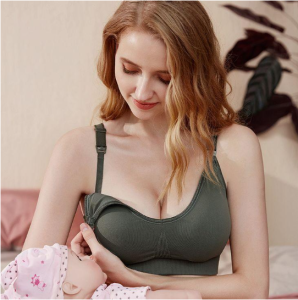
So, are nursing bras FSA eligible? The short answer: generally, no. Nursing bras are usually categorized as personal clothing items, which do not qualify for reimbursement through FSA.
However, there are exceptions. If a nursing bra is purchased as part of a medical-grade pumping kit or recommended by a healthcare provider for a specific medical reason, it may be considered eligible. In such cases, a Letter of Medical Necessity (LMN) from your doctor could help justify the claim.
When Nursing Bras Qualify as a Medical Expense
Situation-specific nursing bras may be eligible for an FSA account:
- A doctor’s recommendation for health issues. A mom might undergo the above extreme mastitis, back strain, or be in need of specialized support as a result of medical complications.
- Medical devices and associated bras. A few businesses manufacture nursing bras tailored for the use of a hands-free breast pump only, which can be defined as medical equipment.
- Needs after surgery. In rare situations, a Momcozy nursing bra, if advised as a post-Caesarean aid to recovery, might be a C-section or breast surgery, covered.
Such instances need paperwork, but they indicate that their rules can be interpreted differently.
How to Purchase Nursing Bras With FSA Funds
So, if you think your nursing bras meet the criteria, the steps to use your FSA money are as follows:
- Check your FSA provider’s list of eligible expenses. Some plans provide a searchable catalog of approved products.
- Ask your doctor for a Letter of Medical Necessity (LMN). This letter should explain why the nursing bra is medically necessary.
- Buy from an approved retailer. Some FSA stores specifically list nursing and maternity products that qualify.
- Use your FSA card at checkout. If the item is eligible, it will be covered immediately.
Therefore, mothers who require plus-size nursing bras should take the trouble to locate retailers who have a stock of extended sizes in their FSA-approved selection.
Where to Find FSA-Approved Nursing Bras
Not all local stores have a stock of FSA-eligible nursing bras. However, a few online retailers might come in handy:
- FSAstore.com – A store that deals mostly with FSA-approved products, Partly maternity and nursing products.
- The likes of Amazon or Target – Use the “FSA/HSA eligible” filter to get the products that comply with the requirements.
- Medical stores – Occasionally have special nursing bras for medical device users.
Most common nursing bras, for example, popular plus size nursing bras, might not be considered as eligible products and therefore, the label is not there—in that case, a buying check would be prudent.
Tips for Keeping Receipts and Documentation
If you try to use FSA funds for nursing bras, it’s essential to keep detailed records in case your claim is questioned:
- Save all receipts. They should clearly list the product name and purchase date.
- Keep your LMN (if required). Store it in both paper and digital form.
- Track claims online. Many FSA providers allow you to upload receipts directly to their portals.
Good documentation increases the chances of reimbursement approval and protects you from denied claims later.
What to Do If Your Claim Is Denied
If your FSA provider declines your nursing bra claim, it is not necessary to panic. Try the following steps:
- The denial letter should be carefully reviewed. It will inform you about the rejection reason.
- Provide more paperwork. Perhaps a more detailed LMN from your doctor will do the trick.
- Decide court (appeal). You can check the terms of your FSA plan. Most of them have a procedure for appeals setting, which says that if you suspect your expense is eligible, you can file a complaint.
- Think about insurance. Maybe some kinds of health care plans or HSAs (Health Savings Accounts) will be more liberal with nursing-related purchases.
However, even if a nursing bra is denied, other related products like breast pumps, nursing pads, and lactation supplies are almost always FSA eligible.
Conclusion
So, are nursing bras FSA eligible? In most cases, they are not automatically covered since they are categorized as clothing. However, with proper documentation and a medical recommendation, certain situations may qualify them as eligible expenses.
For moms—especially those searching for plus-size nursing bras—it’s important to check with your FSA provider, explore approved retailers, and keep thorough records. While not every nursing bra can be purchased with FSA funds, many other essential breastfeeding items can, helping to ease the financial load of motherhood.
Ultimately, the best approach is to treat your FSA as a tool for covering the medical side of breastfeeding—like pumps and supplies—while investing personally in supportive, comfortable nursing bras that make the journey more manageable.


