When Machines Become Teammates: Designing Physical AI That Humans Can Understand and Trust

For most of history, machines have been tools. A person gives a command, the machine responds, and the relationship is clear. A driver controls a vehicle. A construction worker operates heavy equipment. A farmer guides a tractor. The human makes the decisions.
Physical AI is changing that relationship.
Machines are beginning to sense their surroundings, make decisions, and act with greater independence. Autonomous vehicles can navigate roads. Mining equipment can operate with limited human control. Robots can move through warehouses and factories while responding to changing conditions.
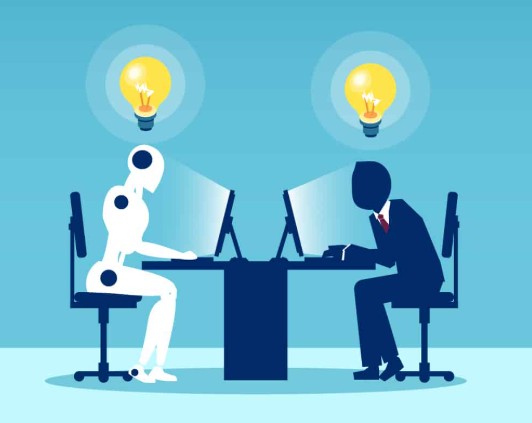
As machines gain more independence, people will need to work with them differently. The machine is no longer simply a tool. In many situations, it becomes something closer to a teammate.
That creates a new challenge for physical AI. Building a machine that can make decisions is not enough. People must also understand those decisions and trust the machine enough to work alongside it.
Trust Starts With Predictable Behavior
People trust systems when they have a reasonable idea of what those systems will do.
Imagine working beside a human colleague who behaves differently every day. Sometimes that person follows procedures, sometimes they do not, and there is no clear way to predict their next action.
Trust would disappear quickly.
The same principle applies to autonomous machines.
Workers need to understand how a machine is likely to behave. Drivers need to know when an automated system will take action. Operators need to understand how equipment responds when conditions change.
Predictability does not mean a machine must behave exactly the same way in every situation. It means its actions should make sense based on the conditions around it.
Consistency creates confidence.
Machines Need to Communicate
Human teams depend on communication.
People signal intentions constantly. Drivers use turn signals. Construction workers use hand signals. Pilots communicate with control teams. Warehouse employees tell one another where they are going and what they are doing.
Autonomous machines need similar ways to communicate.
If a machine plans to stop, turn, change direction, or request assistance, nearby people should be able to understand that intention.
Communication can take many forms. It may involve lights, displays, sounds, alerts, or information sent to an operator.
The specific method will depend on the machine and environment.
What matters is clarity.
A machine that behaves intelligently but communicates poorly can still feel unpredictable.
Understanding Why Matters
People do not always need to understand every calculation behind an AI decision.
They do need enough information to understand why the machine behaved a certain way.
Suppose an autonomous construction vehicle suddenly stops.
The operator may want to know whether the machine detected a person, found an obstacle, experienced a sensor problem, or lost confidence in its surroundings.
A simple explanation can make the difference between confusion and trust.
This becomes especially important when machines operate in high-stakes environments.
Operators need useful information, not technical complexity.
Physical AI should explain important decisions in language people can act on.
Humans Will Remain Part of the System
Autonomy is sometimes presented as a complete replacement for human control.
In practice, many autonomous systems will continue working with people.
The balance will vary.
A machine may operate independently most of the time but ask for help in unusual situations. A human operator may supervise several autonomous vehicles. Another system may provide recommendations while leaving the final decision to a person.
This creates a shared responsibility.
Designers must decide when the machine should act independently and when a human should become involved.
Those boundaries need to be clear.
If people do not know when they are responsible, mistakes can happen.
Knowing When the Machine Is Uncertain
One of the most important abilities for physical AI is recognizing uncertainty.
No autonomous system will understand every situation perfectly.
A sensor may be blocked. Weather may reduce visibility. An unfamiliar object may appear. The machine may enter an environment that was not well represented during training.
A trustworthy system should recognize when its confidence drops.
It should then respond appropriately.
That could mean slowing down, stopping, changing its route, or asking a human operator for assistance.
Pretending to know the answer when information is uncertain creates unnecessary risk.
A machine that understands its limits can become a better teammate.
Designing for the Human Operator
As autonomy increases, the role of operators will change.
Instead of controlling every movement, people may spend more time supervising systems, reviewing alerts, managing exceptions, and making higher-level decisions.
This sounds easier, but it creates new challenges.
If an operator supervises several machines, the system must help that person understand what deserves attention. Too many alerts create noise. Too little information creates uncertainty.
Interfaces must present the right information at the right time.
The goal is not to show everything the AI knows.
The goal is to help the human make good decisions.
Simulation Can Test Human-Machine Interaction
Simulation is useful for more than testing whether an autonomous machine can avoid obstacles or follow a route.
It can also help teams understand how humans and machines work together.
Engineers can create situations where a machine needs human assistance. They can test how alerts are presented and how quickly operators respond. They can study whether machine behavior is understandable to nearby workers.
Teams can also simulate failures and unusual events that would be difficult or unsafe to reproduce physically.
Companies such as Applied Intuition provide simulation and validation infrastructure that can support testing across complex physical AI environments before systems reach real-world deployment.
This allows human-machine interaction to become part of validation rather than something considered only after the technology is built.
Trust Requires Evidence
People should not be expected to trust autonomous systems simply because they are told the technology is advanced.
Trust needs evidence.
Systems must demonstrate reliable behavior across many situations. Organizations need to test normal conditions, difficult conditions, and failures.
Performance should be measurable.
When problems appear, teams need processes for understanding what happened and improving the system.
This creates earned trust.
Over time, operators learn what the machine can handle and where its limits exist.
Different Industries Need Different Relationships
Human-machine teamwork will not look the same everywhere.
A passenger interacting with an automated vehicle has different needs from a worker operating around autonomous mining equipment.
A farmer supervising autonomous machinery has different responsibilities from a defense operator working with an intelligent system.
The technology must reflect these differences.
There is no single interface or communication method that works everywhere.
What can remain consistent is the design principle.
People need to understand what the machine is doing, what it intends to do, and when it needs help.
Better Machines Can Make Better Human Teams
The goal of physical AI should not simply be to remove people from processes.
In many situations, the greater opportunity is to combine the strengths of humans and machines.
Machines can monitor enormous amounts of information. They can perform repetitive tasks consistently. They can operate in dangerous environments and react quickly to changing data.
Humans bring judgment, context, creativity, and experience.
Strong systems use both.
A machine can handle routine operations while a person focuses on unusual situations. AI can provide information while the operator makes the final decision. Autonomous equipment can reduce human exposure to dangerous work while people remain responsible for supervision.
This is where physical AI becomes more than automation.
Building Trust Into Physical AI
The next generation of autonomous systems will not operate in empty environments.
They will share roads with drivers and pedestrians. They will work beside people on construction sites, farms, factories, mines, and other complex environments.
Technical performance will remain essential, but it will not be enough.
Machines must behave predictably. They must communicate clearly. They must recognize uncertainty and involve people when necessary. They must provide enough information for humans to understand important decisions.
As machines gain more intelligence, the relationship between humans and technology will change with them.
The most successful physical AI systems will not simply be machines that can operate without people.
They will be machines that people can understand, work with, and trust as capable teammates.