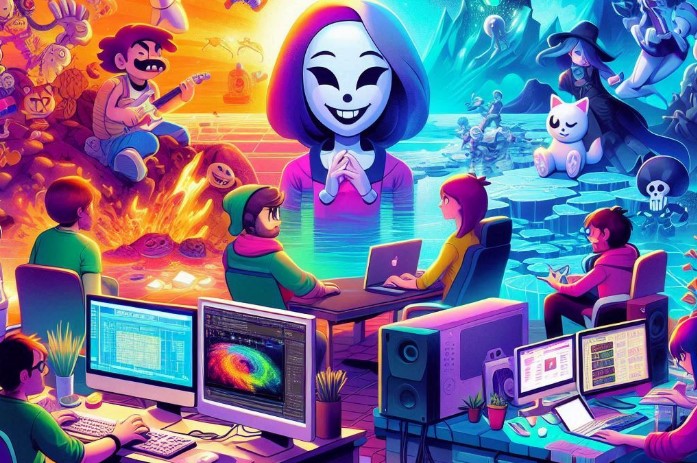
How Game Studios Are Powering the Metaverse Using Unreal Engine and Unity

The metaverse, a term once confined to the realm of science fiction, is now a burgeoning reality, largely powered by technological advancements in virtual reality (VR) and game development. At the heart of this digital transformation are two formidable game engines: Unreal Engine and Unity. These platforms have become the linchpins in the creation and expansion of the metaverse, enabling game studios to craft immersive virtual worlds that captivate and engage.
The concept of the metaverse has evolved from a speculative idea into a tangible and rapidly growing facet of the gaming industry. This digital universe is characterized by its interconnected, immersive environments where users can interact in real-time, blurring the lines between reality and the virtual world. Game studios are now at the forefront, spearheading this evolution by leveraging cutting-edge technologies to develop experiences that are as engaging as they are expansive.
Evolution from Science Fiction to Reality
The journey of the metaverse from science fiction to reality is a fascinating tale of technological innovation. Initially, the concept was popularized in literature and film, capturing the imagination of audiences with the idea of alternate virtual worlds. As technology advanced, particularly in VR and augmented reality (AR), these once-fantastical ideas became increasingly achievable. Game developers seized the opportunity to bring these concepts to life, leading to an explosion of immersive virtual environments that are now a staple in the gaming industry.
Interconnected Virtual Worlds
The metaverse is distinguished by its interconnected nature, offering seamless transitions between diverse virtual worlds. This interconnectedness allows players to move fluidly from one environment to another, maintaining continuity in their digital experiences. It enables social interactions, commerce, and collaborative gameplay across different platforms, creating a rich tapestry of virtual experiences that continuously evolve and expand. Game studios are utilizing advanced networking technologies to ensure these transitions are smooth and engaging for users.
Beyond Gaming: A Multifaceted Ecosystem
While gaming is at the core of the metaverse, its applications extend far beyond entertainment. The metaverse is becoming a multifaceted ecosystem with implications for education, commerce, and social interaction. Virtual classrooms, online marketplaces, and social hubs are just a few examples of how the metaverse is reshaping various industries. This expansion is driving demand for sophisticated VR gaming development, as game studios harness Unreal Engine and Unity to create not just games but comprehensive virtual experiences that cater to a broad spectrum of needs.
Unreal Engine: Crafting Hyper-Realistic Environments
Unreal Engine, developed by Epic Games, is renowned for its ability to produce hyper-realistic graphics and intricate game mechanics. Its advanced rendering capabilities and robust toolset make it an ideal choice for metaverse games development, where visual fidelity and immersive environments are paramount.
Photorealistic Rendering Capabilities
Unreal Engine’s photorealistic rendering capabilities are second to none, setting a high standard for visual quality in the metaverse. The engine utilizes state-of-the-art technologies to simulate lifelike textures, shadows, and lighting, creating environments that are virtually indistinguishable from reality. These advanced rendering techniques enhance the player’s immersion, making virtual worlds more engaging and believable. Game developers leverage these capabilities to craft stunning landscapes and intricate details that captivate users and draw them deeper into the metaverse.
Blueprint Visual Scripting for Developers
The Blueprint Visual Scripting feature of Unreal Engine is a game-changer for developers, particularly those with limited programming expertise. This user-friendly tool allows developers to create complex game logic through a visual interface, bypassing the need for extensive coding. As a result, developers can focus more on creativity and design, experimenting with new ideas and rapidly prototyping their concepts. This feature empowers a wider range of creators to participate in metaverse development, fostering innovation and diversity in virtual environments.
Real-Time Ray Tracing and Dynamic Lighting
Real-time ray tracing is another groundbreaking feature of Unreal Engine, enhancing the realism of virtual worlds by accurately simulating the behavior of light. This technology allows for dynamic and realistic lighting effects, such as reflections and shadows, which respond to changes in the environment. These visual enhancements significantly boost the immersive quality of VR games, enabling players to experience a more authentic and captivating metaverse. By incorporating real-time ray tracing, developers can create visually stunning experiences that continually push the boundaries of virtual reality.
Cross-Platform Development and Accessibility
Unreal Engine’s support for cross-platform development ensures that metaverse experiences are accessible to a broad audience. The engine is compatible with a wide array of platforms, including PCs, consoles, mobile devices, and VR headsets. This versatility allows developers to reach diverse player demographics, expanding the metaverse’s reach and influence. By developing games that can be enjoyed across multiple platforms, studios ensure their creations are available to as many users as possible, fostering a more inclusive and widespread metaverse.
Unity: Democratizing Game Development
Unity, a versatile and user-friendly game engine, has democratized game development by providing accessible tools and resources for creators of all skill levels. Its flexibility and scalability make it a popular choice for studios looking to hire Unity game developers to bring their metaverse visions to life.
User-Friendly Interface and Learning Curve
Unity’s user-friendly interface is designed to lower the barrier to entry for aspiring developers. The engine provides comprehensive documentation and intuitive design tools that simplify the development process, allowing creators to focus on innovation rather than technical hurdles. This accessibility encourages a diverse range of developers to experiment with game design, leading to a more vibrant and creative gaming community. By offering resources that are easy to understand and navigate, Unity empowers individuals to bring their unique visions to the metaverse.
Extensive Asset Store and Resource Library
The Unity Asset Store is a treasure trove of pre-made assets, plugins, and tools that accelerate the game development process. This extensive library provides developers with a wealth of resources to draw upon, enabling them to focus on crafting unique experiences rather than building everything from scratch. With access to high-quality assets, developers can experiment with different styles and mechanics, fostering creativity and innovation within the industry. The Asset Store also encourages collaboration, as developers share and utilize each other’s creations to enhance their projects.
Robust Community Support and Collaboration
Unity boasts a vibrant and supportive community of developers who actively share knowledge, resources, and assistance. This robust network facilitates collaboration and problem-solving, as developers exchange ideas and solutions to common challenges. The community’s collective expertise is an invaluable asset, providing newcomers with the guidance they need to succeed. By fostering a collaborative environment, Unity ensures that developers have the support they need to create compelling metaverse experiences, regardless of their skill level.
Multiplatform Integration and Versatility
Unity’s ability to seamlessly integrate with various platforms is a key advantage for developers looking to create metaverse experiences. The engine supports development for a wide range of devices, including VR headsets, consoles, and mobile phones. This versatility allows developers to design experiences that can be enjoyed on any device, reaching a broader audience and maximizing their impact. By enabling multiplatform integration, Unity ensures that metaverse projects are accessible and engaging for users across different platforms and devices.
The Synergy Between Unreal Engine and Unity in the Metaverse
While Unreal Engine and Unity each have their distinct strengths, their combined influence is shaping the future of the metaverse. Game studios are increasingly adopting a hybrid approach, utilizing both engines to leverage their complementary features and create richer, more complex virtual experiences.
Collaboration in Virtual Reality Games
In the realm of virtual reality games, the synergy between Unreal Engine and Unity is particularly evident. Unreal Engine’s photorealistic rendering capabilities, when combined with Unity’s versatile development tools, allow studios to craft visually stunning and interactive VR environments that push the boundaries of player immersion. This collaboration enables developers to create experiences that are not only graphically impressive but also dynamic and engaging, providing players with a seamless and captivating journey through the metaverse.
Fostering Innovation in Game Development
The collaboration between these two powerhouse engines fosters innovation by providing developers with a diverse toolkit to experiment and iterate on their ideas. The flexibility offered by both engines allows game studios to explore new narratives, mechanics, and design elements that enrich the metaverse with diverse and engaging experiences. By combining the strengths of Unreal Engine and Unity, developers are empowered to push the boundaries of what is possible, driving the evolution of virtual worlds and expanding the horizons of interactive entertainment.
Enhancing Player Experience and Engagement
The synergy between Unreal Engine and Unity enhances the overall player experience by combining cutting-edge graphics with user-friendly development tools. This collaboration results in richer, more immersive environments that captivate players and encourage deeper engagement. Developers can create experiences that are visually stunning and technically sophisticated, providing players with a seamless and rewarding journey through the metaverse. By leveraging the strengths of both engines, game studios ensure that their creations are not only visually appealing but also interactive and engaging, fostering a deeper connection with users.
Case Studies: Pioneering Studios in Metaverse Development
by Flipsnack (https://unsplash.com/@flipsnack)
Several game studios have emerged as pioneers in the metaverse development space, harnessing the capabilities of Unreal Engine and Unity to create groundbreaking virtual worlds.
Epic Games: Leading the Charge
Epic Games, the creator of Unreal Engine, is at the forefront of metaverse development with its flagship title, Fortnite. What began as a battle royale game has evolved into a dynamic social platform where players can attend virtual concerts, engage in interactive events, and connect with others in a shared virtual space. By leveraging Unreal Engine’s capabilities, Epic Games continues to push the envelope of what is possible within the metaverse.
VRChat: A Unity-Powered Social Universe
VRChat, developed using Unity, exemplifies the potential of user-generated content within the metaverse. This social platform allows users to create and explore custom virtual worlds, fostering a vibrant community-driven ecosystem. Unity’s accessibility and flexibility have enabled VRChat to thrive as a hub for creativity and social interaction within the metaverse.
Roblox: A Hybrid Platform for Creativity
Roblox stands as a testament to the power of hybrid metaverse platforms. Utilizing features from both Unreal Engine and Unity, Roblox offers a unique space where users can not only play but also create. It empowers users to build their own games and virtual experiences, democratizing content creation and fostering a vibrant user-generated community. Roblox’s success underscores the potential of combining the strengths of different engines to create a versatile and creative metaverse environment.
The Future of Metaverse Game Development
As the metaverse continues to expand and evolve, the role of Unreal Engine and Unity in shaping its future cannot be overstated. These engines are not merely tools for game development; they are catalysts for innovation, enabling studios to craft immersive experiences that transcend traditional gaming boundaries.
Opportunities for Game Developers
For game developers, the metaverse presents an unprecedented opportunity to explore new creative horizons and redefine the gaming landscape. By harnessing the power of Unreal Engine and Unity, developers can create experiences that captivate and engage users in ways previously unimaginable. These engines provide the tools necessary to develop complex, interactive environments that challenge traditional gaming conventions and push the boundaries of what’s possible in digital entertainment.
Engaging the Gaming Community
The advent of the metaverse also invites greater interaction and engagement within the gaming community. As studios continue to push the boundaries of what is possible, they foster debates and discussions that enrich the collective understanding of gaming and its potential. The metaverse serves as a platform for creativity and innovation, encouraging players and developers alike to explore new ideas and collaborate on groundbreaking projects. This dynamic interaction between developers and users is crucial to the ongoing evolution of the metaverse.
Paving the Way for Future Technologies
The development of the metaverse is paving the way for future technologies that will further enhance the virtual experience. As Unreal Engine and Unity continue to evolve, they will incorporate new advancements in artificial intelligence, machine learning, and interactive storytelling. These technologies will enable even more sophisticated and immersive experiences, transforming the metaverse into a vibrant and ever-evolving digital landscape. By pushing the boundaries of technology, game studios are charting a course for the future of the metaverse, creating a limitless realm of possibilities for users to explore.
In conclusion, the metaverse is a testament to the transformative power of technology in the gaming industry. Through the combined prowess of Unreal Engine and Unity, game studios are not only powering the metaverse but also charting the course for its future. As we stand on the precipice of this new digital frontier, the possibilities are as limitless as the virtual worlds we create.